
Traditional Nepali Wedding Rituals: Meaning & Planning Guide
A traditional Nepali wedding is not only a ceremony between two people. It is a family blessing, a cultural gathering, and a sequence of rituals that carry deep meaning. The exact customs can vary by community, religion, region, and family preference, but most Nepali weddings share a common spirit: honoring elders, welcoming two families, and blessing the couple as they begin married life.
This guide explains the main traditional Nepali wedding rituals in a practical way for local and international couples. If you are planning from outside Nepal, also read our Nepal wedding planning FAQ for international couples.
Before the Wedding: Families, Timing, and Ritual Preparation
Many Nepali weddings begin with family discussions around the ceremony date, auspicious timing, guest expectations, priest or officiant requirements, and the flow of events. For destination weddings, this stage is also when couples confirm venues, guest transport, accommodation, decor, photography, and whether rituals will be performed in full or adapted symbolically.
- Family blessings: Elders from both sides usually play an important role in approving, blessing, and guiding the celebration.
- Auspicious timing: Some families choose the wedding date and ceremony hour with help from a priest or family astrologer.
- Ritual materials: Flowers, garlands, tika, rice, lamps, sweets, sacred thread, cloth, and offerings are prepared before the main ceremony.
Pre-Wedding Ceremonies
Pre-wedding events bring warmth and celebration before the formal ceremony. They are also a beautiful way for guests from abroad to experience Nepali hospitality and family culture.
- Supari or engagement: Families formally acknowledge the union and exchange symbolic items such as betel nuts, sweets, or gifts, depending on custom.
- Mehendi: Henna is applied to the bride's hands and sometimes to close family members. It is usually festive, musical, and relaxed.
- Haldi: Turmeric paste is applied as a blessing for purification, beauty, protection, and good fortune before the wedding day.
- Sangeet or family celebration: Many modern weddings include music, dance, speeches, and informal moments that help both families connect.
Janti: The Groom's Procession
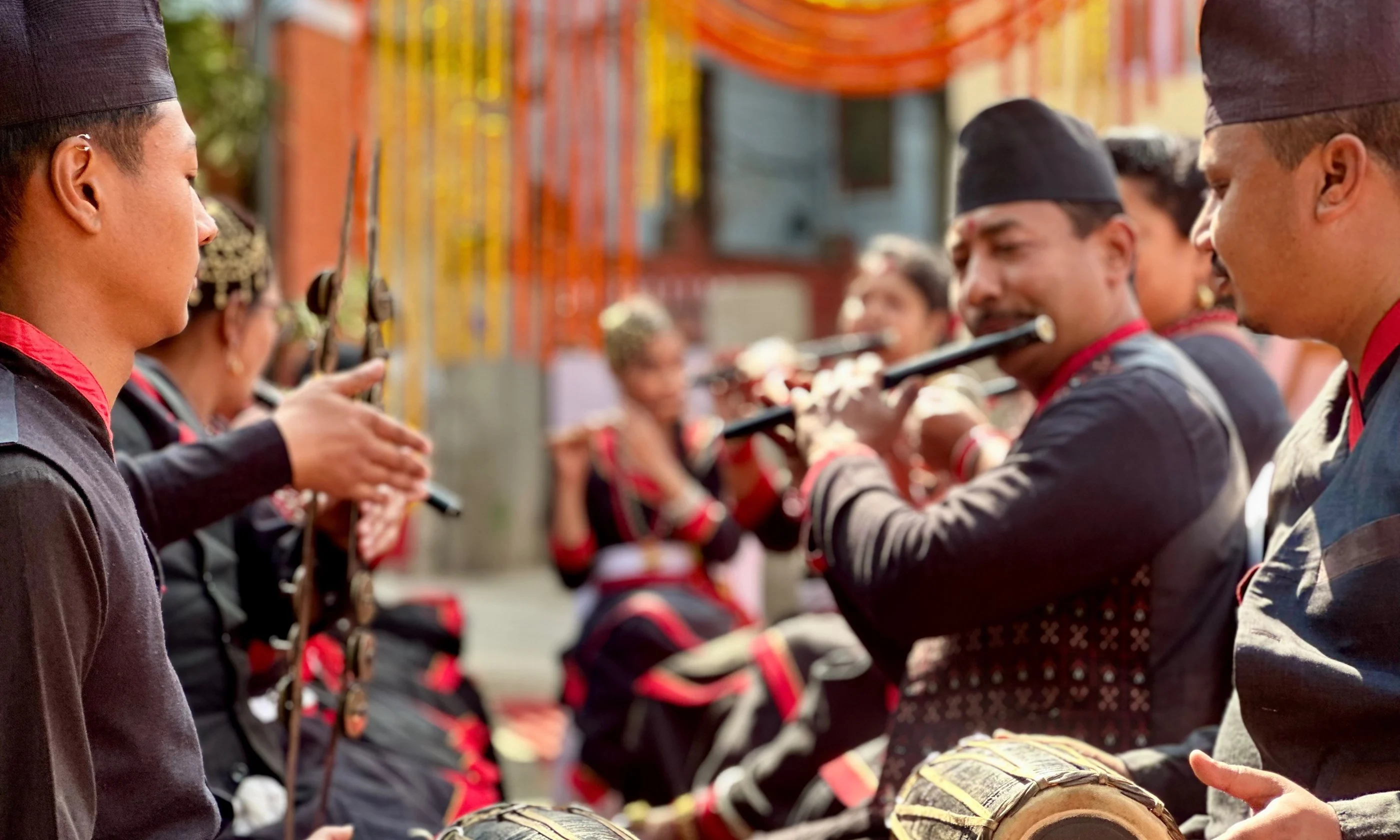
The Janti is the groom's wedding procession, often arriving with music, family members, and joyful celebration. In Kathmandu weddings, this may be traditional, modern, or a fusion of both. For luxury and destination weddings, the arrival can be carefully choreographed with live music, decor, photography, and guest coordination.
Swoyambar: The Public Moment of Acceptance
Swoyambar is one of the most recognizable parts of many Nepali weddings. The couple exchanges garlands, receives blessings, and is formally recognized before family and guests. For international couples, this is often the easiest ritual to understand visually because it expresses mutual acceptance, respect, and joy.
Kanyadaan, Sindoor, and Potay
In many Hindu Nepali weddings, Kanyadaan is an emotional ritual where the bride's family gives blessings as she enters married life. Sindoor is the application of vermillion powder, and Potay is the traditional beaded necklace worn by many married Nepali women. These rituals carry strong cultural meaning, so couples should discuss comfort, family expectations, and symbolic adaptations before the ceremony.
Sacred Fire, Vows, and Blessings
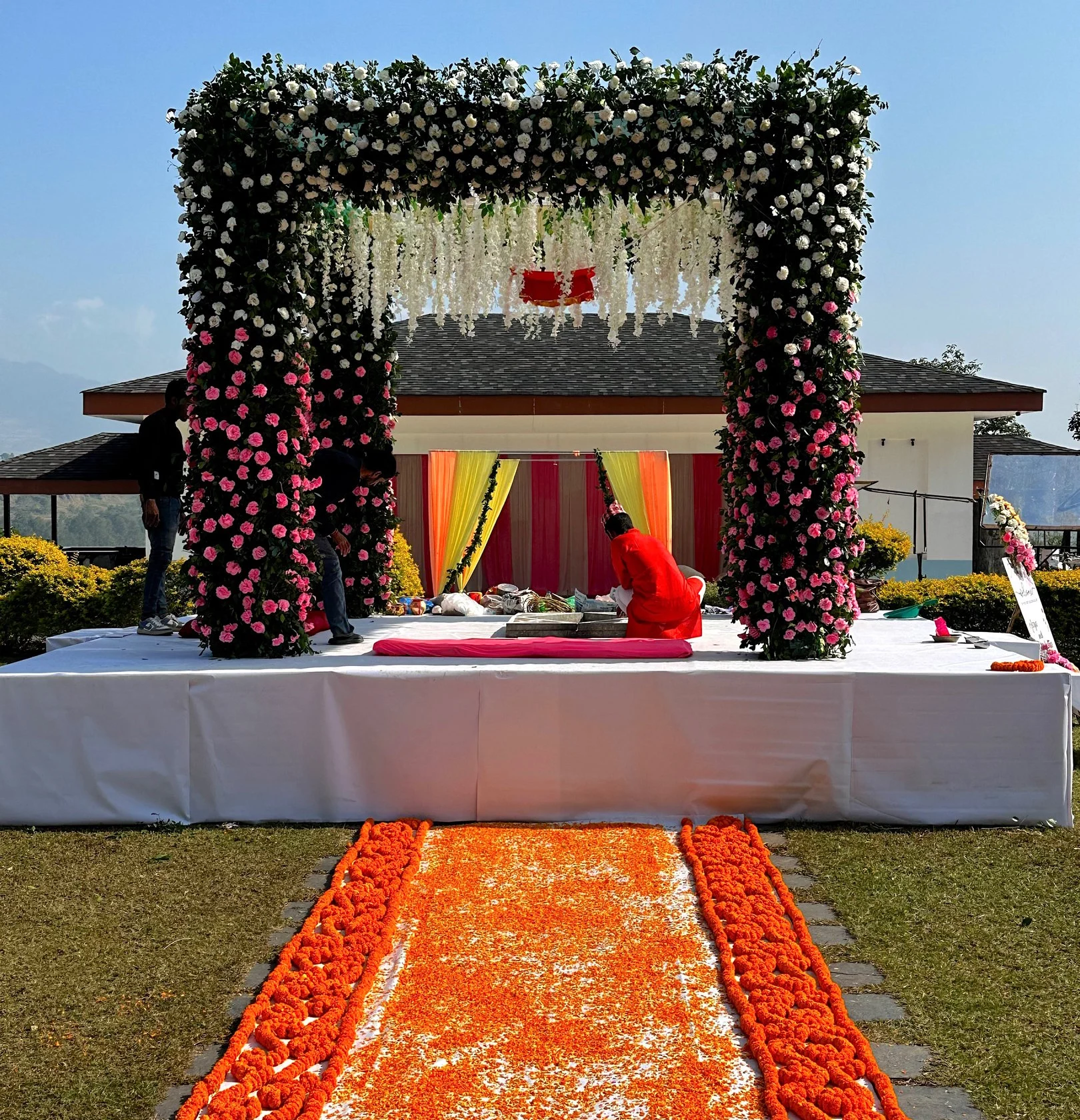
The sacred fire, priest-led mantras, offerings, and vows give the ceremony its spiritual center. Depending on the family tradition, the couple may circle the fire, offer grains or flowers, and receive tika and blessings from elders. Translation is especially helpful for guests who do not speak Nepali or Sanskrit, because it turns the ceremony from something beautiful to watch into something meaningful to understand.
Newari, Buddhist, and Regional Variations
There is no single version of a Nepali wedding. Newari weddings, Buddhist blessings, Hindu ceremonies, mountain community traditions, and intercultural weddings can all have different ritual sequences. The most respectful approach is to ask both families what matters most, then design a ceremony flow that keeps the essential customs intact while making the day comfortable for the couple and guests.
Planning Tips for International Couples
- Confirm the level of tradition early: Decide whether you want a full ritual ceremony, a shorter symbolic ceremony, or a fusion celebration.
- Use a ceremony translator: A short explanation before each ritual helps international guests feel included.
- Choose the venue carefully: Rituals involving fire, processions, music, or large family groups need the right layout. Our Kathmandu wedding venue guide can help with that decision.
- Plan the photography flow: Some rituals move quickly, so the photographer and planner should know the sequence in advance.
- Respect family priorities: Traditional weddings are emotional for parents and elders. Build space for blessings, greetings, and family photographs.
How Kathmandu Wedding Helps
Kathmandu Wedding helps couples plan culturally rooted ceremonies with the right priest or officiant, ritual materials, decor, timing, family coordination, guest explanation, and on-site management. We also help international couples adapt Nepali wedding rituals respectfully, without losing the heart of the tradition.
For visual inspiration, browse our wedding gallery. To compare planning support, read our Kathmandu wedding planner guide, or message our planning team with your ceremony ideas.